
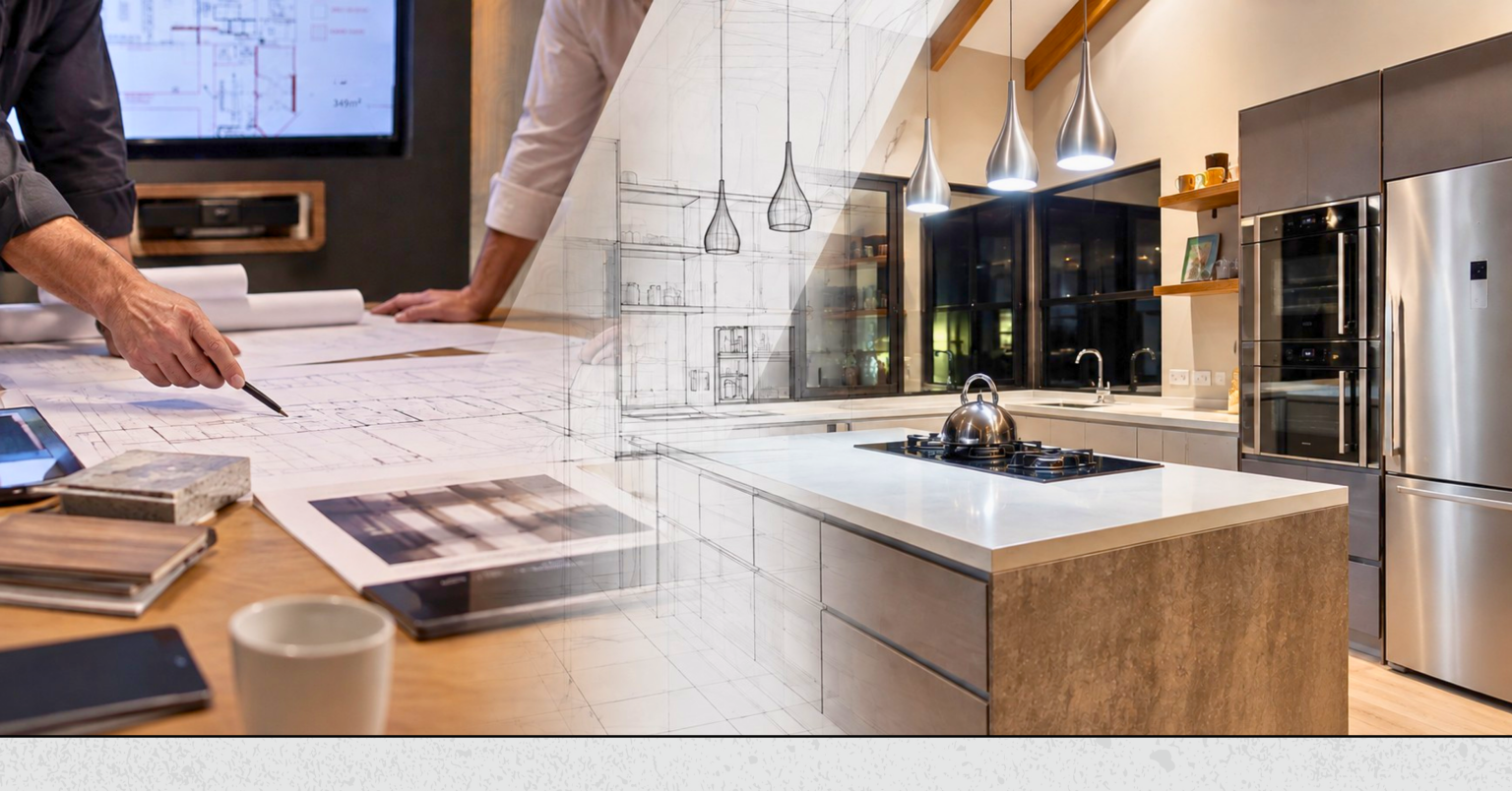
A great residential design can look completely resolved on paper. The materials have been selected, the details considered, and every element has a purpose. Then it must be built.
That’s where a different set of questions arises. Will the material behave as expected? Can that detail be manufactured as drawn? How will the different elements come together on site? And what happens when the reality of the space doesn’t quite match the plans?
For architects, interior designers, and project managers, the right implementation partner helps answer those questions without losing sight of the original concept.
Bridging the Gap Between Design and Delivery
A gap often exists between knowing what a space should look like and knowing exactly how to realise it. Good implementation lies in that gap.
It means understanding the design well enough to translate it into practical manufacturing, shopfitting, and installation requirements. It also means recognising when a detail requires further consideration before it reaches the factory or site.
The aim isn’t to reinterpret the design; it’s to understand its intent and find the best way to deliver it in the real world.
The Earlier the Conversation, the Better
Some of the most useful implementation conversations take place long before anyone arrives on site.
Bringing manufacturing, shopfitting, and implementation expertise into the process early can help teams work through materials, dimensions, fixing methods, finishes, and other practical considerations while there’s still time to make informed decisions.
It also gives everyone involved a chance to understand the project’s requirements.
Architects, designers, project managers, contractors, manufacturers, and installers may approach a project from slightly different perspectives. When those perspectives align early, teams can spot and solve potential challenges more easily.
Bespoke Work Rarely Follows a Formula
Residential projects are inherently personal. Different spaces, materials, and design details bring different requirements, particularly at the bespoke end of the market. That’s why flexibility matters.
A detail that works perfectly in one environment may require a different approach in another. A material may behave differently during manufacturing, or existing site conditions may reveal something not anticipated from the drawings.
Experience doesn’t prevent those things from happening, but it does help you know what to do when they do occur.
A good implementation partner should be able to adapt, solve problems, and communicate with the wider project team without unnecessarily compromising the final result.
Protecting the Design Intent
A carefully considered junction, a bespoke piece of joinery, or a particular finish might be a small part of the overall project, but if it isn’t executed properly, it can change how the entire space feels.
Protecting design intent requires more than simply following a drawing. It requires understanding how components are manufactured, how materials come together, and how those decisions translate through shopfitting and installation.
This is also where having manufacturing and implementation work closely together can make a difference. When the people making the components understand how they’ll ultimately be installed, fewer gaps remain between what’s produced and what’s needed on site.
Good Implementation Is a Team Effort
The best outcomes occur when everyone involved understands their role and is willing to collaborate when change is needed.
At ALCLAD, we’ve spent more than five decades working across design, manufacturing, shopfitting, and implementation. That experience has taught us that our role isn’t simply to arrive at the end of the process to install what’s been made.
It’s to work alongside the professional team, understand what they’re trying to achieve, and bring the practical knowledge needed to help make it happen.