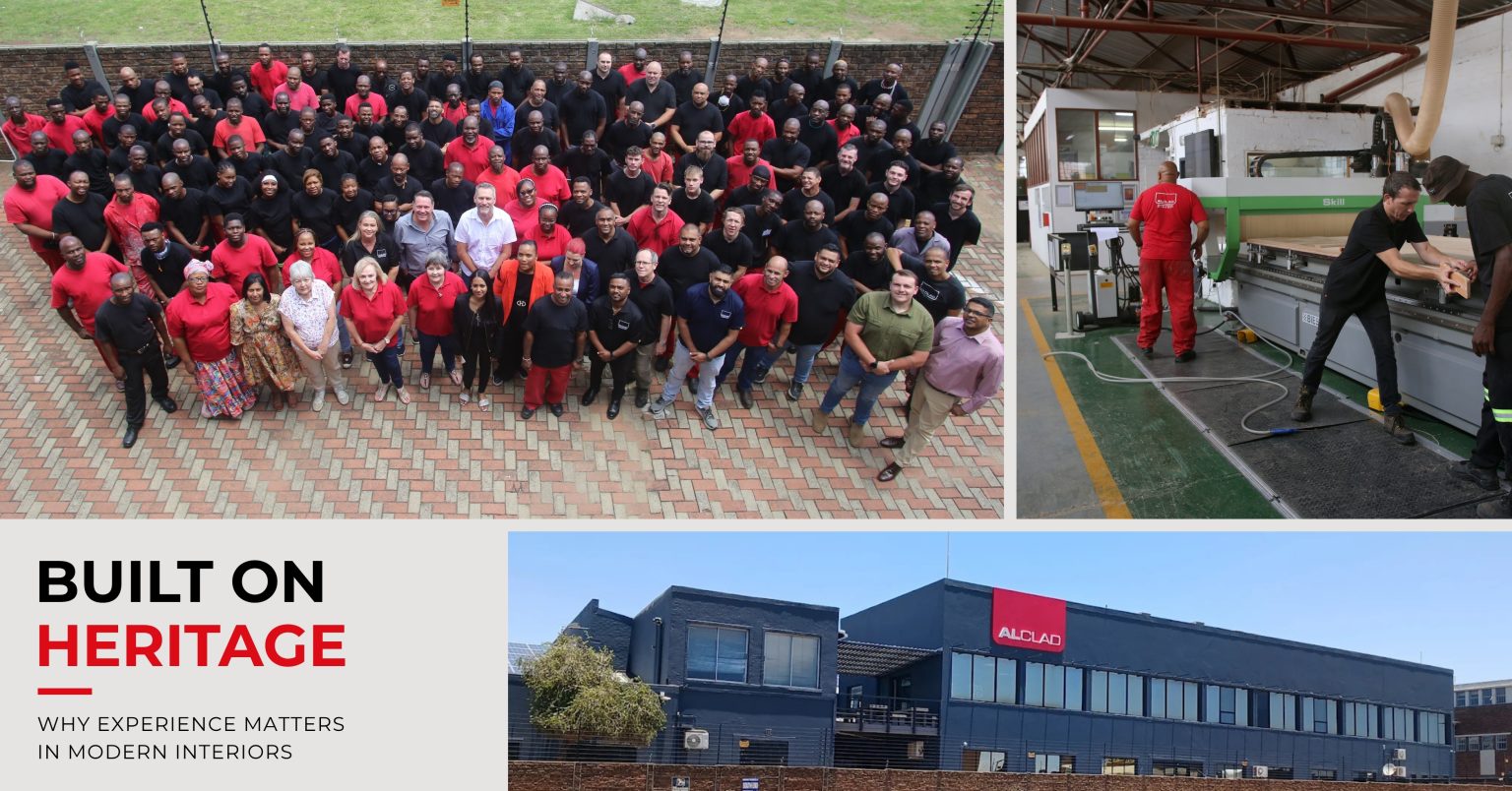
The shopfitting interiors industry looks very different today than it did five decades ago. Technology has transformed manufacturing, materials and methods have evolved, and clients expect greater levels of consistency, collaboration, and responsiveness from the businesses they work with.
Against that backdrop, longevity can be easy to dismiss as simply a measure of time. But the real value of heritage isn’t how many years a company has been operating. It’s what has been learnt, improved, and carried forward along the way.
For businesses in the built environment, experience can influence everything from decision-making to problem-solving and the relationships developed over time. The strongest heritage isn’t about continuing to work as things have always been done; it’s about using what you’ve learnt to become better prepared for what comes next.
Heritage Is More Than Longevity
Every project brings different requirements, every challenge creates an opportunity to learn, and every change in the industry demands some degree of adaptation. Over time, those experiences build knowledge that can’t be developed overnight.
Teams become better equipped to identify potential challenges, understand the implications of decisions and approach unfamiliar situations with experience to draw from. It doesn’t mean having every answer, but it does provide a stronger foundation from which to find one.
For ALCLAD, more than 50 years in the industry represents that accumulated experience rather than simply a milestone.
As Managing Director Craig Wilson puts it: “Heritage doesn’t mean doing things the way we’ve always done them. It’s about understanding what experience has taught us and using that knowledge to keep improving the way we work.”
Experience and Innovation Aren’t Opposites
Heritage and innovation are sometimes treated as opposing ideas, but businesses that remain relevant for decades do so precisely because they keep evolving.
Technology advances, new materials enter the market, and client expectations change. Different generations also enter the workforce with new skills and perspectives. An established business needs to respond to those shifts while understanding which principles are worth holding onto.
Knowledge Moves Between Generations
One of the less visible advantages of longevity is the institutional knowledge that exists within a workforce. Technical expertise isn’t developed through formal training alone; much of it grows through practical experience, problem-solving and working alongside other skilled people.
When that knowledge is shared, craftsmanship evolves rather than remaining fixed. Experienced employees can pass on practical understanding developed over many years, while newer generations bring fresh perspectives and familiarity with emerging technologies.
“Experience has enormous value, but so does fresh thinking. The strongest teams are those where people are willing to learn from one another, regardless of how long they’ve been in the industry,” says Wilson.
Relationships Are Part of Heritage Too
A company’s heritage isn’t only found in its projects or capabilities. It also exists in the relationships developed along the way.
The built environment depends heavily on collaboration between all stakeholders: clients, contractors, designers, suppliers, manufacturers and installation teams. Long-term relationships develop when businesses consistently show they can be relied on to play their part.
The same applies internally where long-serving employees carry knowledge about how work is done and the values and standards that have shaped the organisation. That continuity becomes part of the culture passed from one generation to the next.
Building Forward
Heritage Month naturally encourages us to look back, but heritage’s greatest value may lie in what it allows businesses to do next.
Processes can improve, technology can advance, and businesses can evolve while principles such as quality, reliability, craftsmanship and strong relationships remain constant. With more than five decades of projects, people and partnerships provide a strong foundation at ALCLAD, but the future depends on continuing to learn, invest and respond to what the industry needs next.
“We’ve seen enormous change across our industry over the years. What matters is being willing to move forward without losing sight of the standards and relationships that got you here in the first place,” says Wilson.