
Building across Africa comes with its own realities. From climate and infrastructure to varying expectations across regions, what works in one environment doesn’t always translate directly to another. Delivering consistent, high-quality interiors in this context requires more than technical capability; it requires a clear understanding of those differences.
More Than a Location
Working across 21 African countries has shown that no two projects are ever quite the same. From coastal humidity to inland heat, from busy urban centres to more remote locations, each environment places its own demands on materials, finishes, and installation.
What’s important is not just getting a space built, but ensuring it continues to perform in the conditions it’s placed in. That starts long before anything reaches the site.
Manufacturing with Context
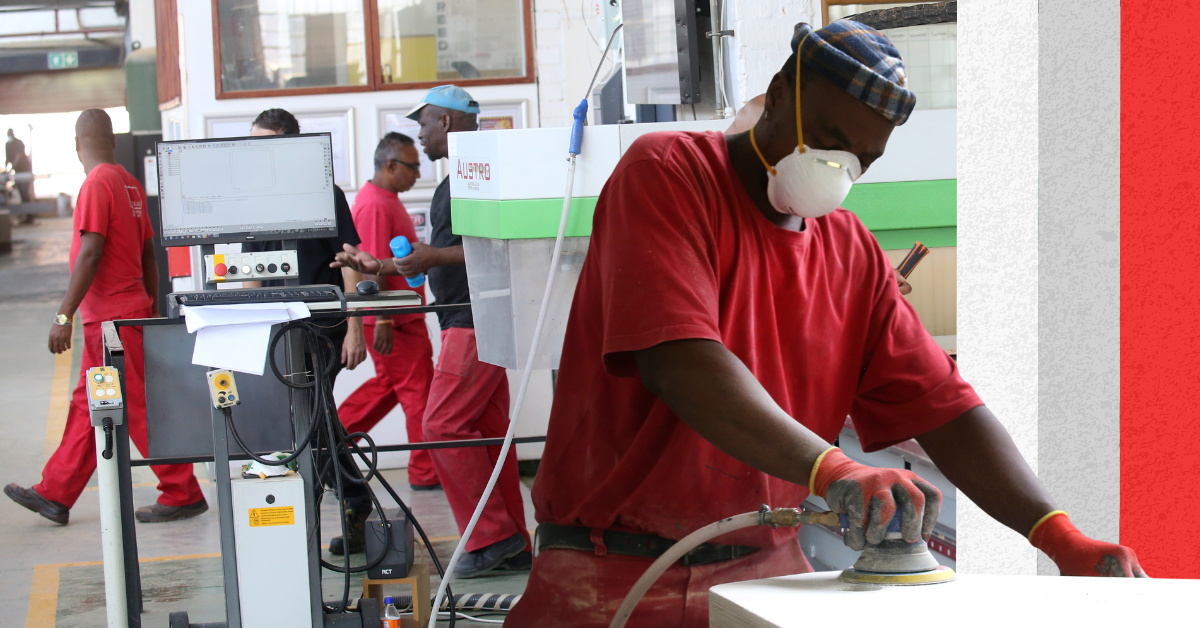
Manufacturing locally, with a clear understanding of where products will be used, allows for better decisions at every stage. Materials can be selected with climate in mind, components produced to suit transport conditions and site realities, and finishes chosen for durability, not just appearance.
It’s a practical approach, but an important one, and it shapes how projects are approached from the start.
Consistency Across Borders
One of the biggest challenges in multi-country projects is maintaining consistency. Brands expect the same look and feel, whether a space is delivered in Johannesburg, Nairobi, or Accra. Customers expect a familiar experience while project teams expect reliable outcomes.
Achieving that level of consistency across different regions requires careful coordination, disciplined processes, and a manufacturing capability that can deliver the same standard every time.
Supporting Growth Through Quality
Across the continent, there’s continued investment in retail, hospitality, and commercial spaces. As these sectors grow, so does the expectation for quality. Well-built interiors serve a functional role, but, importantly, they also shape how spaces are experienced.
In hospitality, they influence guest experience. In retail, they support customer flow and product visibility. In commercial spaces, they contribute to how people work and interact.
Quality matters because its impact extends beyond the build itself.
Built to Last, Wherever It’s Placed
Working across different regions reinforces the importance of durability. Spaces need to hold up under daily use, in varying conditions, often far from where they were produced. That requires careful attention to manufacturing, material selection, and finishing, with a focus that goes beyond short-term thinking.
While building for opening day should be a major focus, so should building for what comes next.
Invested in the Outcome
Over time, experience across the continent builds more than a project portfolio; it builds an understanding of what works, what lasts, and what needs to be considered early to avoid challenges later.
That perspective shapes how projects are approached, with a focus on delivering spaces that perform in the environments they’re built for. Yes, building in Africa is about reaching new markets, but it’s also about contributing to spaces that support growth, reflect quality, and stand the test of time.
If you’re working across different environments, it helps to understand what goes into getting it right. If you’d like to explore it further, feel free to get in touch.