
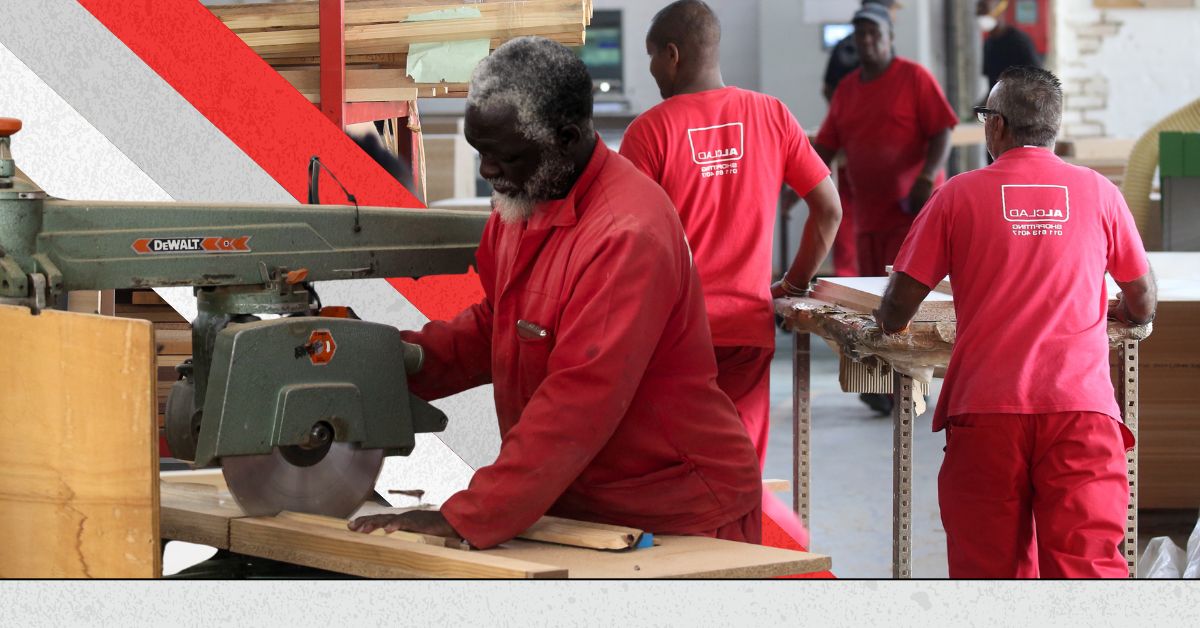
In shopfitting and interior projects, what happens in manufacturing before installation is often taken for granted, but it underpins how efficiently a project runs and how consistently the final result is delivered.
The Work Before the Work
Long before installation teams arrive on site, components are already being shaped, assembled, and checked in a controlled environment. It’s here that drawings are translated into physical elements, materials are processed, and details are resolved.
When this stage is done properly, it builds confidence that the project will proceed smoothly. When it isn’t, issues can cause delays, making clients feel uncertain. Simply put, manufacturing sets the foundation for a successful project.
Precision That Carries Through
Every element in a fit-out depends on accuracy, which directly influences project timelines and quality. Small discrepancies in the factory can lead to delays and installation issues.
This is especially true in projects that require repetition, whether across a single site or multiple locations. Consistency doesn’t happen by chance; it’s built into the manufacturing process.
As Craig Wilson, Managing Director of ALCLAD, puts it: “If you get it right in the factory, everything else becomes easier. If you don’t, you spend time fixing things later.”
That thinking reflects a broader reality across the industry. Precision early on reduces risk later.
More Than Machinery
Advanced machinery plays an important role in achieving that level of precision. Modern equipment allows for tighter tolerances, cleaner finishes, and more efficient production. Except that machinery alone doesn’t guarantee quality.
The outcome depends on skilled teams who understand materials and technology that ensure quality. Manufacturing is about experience and expertise, giving clients confidence in the process.
Reducing Complexity Before Site
One of the biggest advantages of strong manufacturing lies in what it prevents. When components are produced accurately and checked before leaving the factory, there’s less need for on-site adjustments. Installation becomes more straightforward, timelines are easier to maintain, and coordination between teams improves.
By resolving complexity early, manufacturing helps clients feel more in control, ensuring smoother progress, on-time delivery, and less stress during the project.
Consistency at Scale
For projects spanning multiple locations, manufacturing becomes even more critical. Each unit must match the next; finishes must remain consistent; and components must be produced to the same standard every time.
This level of repeatability can only be achieved through controlled processes, accurate systems, and disciplined quality checks. “It’s not just about producing once, it’s about producing consistently’, says Wilson.
A Strategic Advantage
When manufacturing is treated as a core part of the process rather than a supporting function, it becomes a clear advantage. It improves quality, supports efficiency, and reduces uncertainty. And ultimately, it allows projects to move from concept to completion with greater confidence.
Wilson adds, “Manufacturing is where you set the standard. Everything that follows is a reflection of that.”
In an industry where timelines are tight and expectations are high, that standard makes a measurable difference.